
Gambling Addiction Help Canada
Gambling addiction is a serious behavioural condition in which a person struggles to control gambling activity even when it causes financial, emotional, social, or practical harm. For Canada players, the issue is especially important because online gambling can be accessed quickly through websites, mobile devices, and account-based platforms. The speed and privacy of online gambling can make early warning signs easier to overlook.
This guide is written for Betty Casino as an educational resource. Its purpose is not to promote gambling, but to help readers understand gambling-related harm, recognize early signs, and find practical support options. Gambling should never be treated as income, debt recovery, emotional escape, or a solution to financial pressure. When gambling stops feeling controlled, support should be considered early.
Gambling addiction can develop gradually. A person may begin with casual entertainment, then slowly increase the time, money, or emotional focus placed on gambling. Some users may start checking outcomes more often, returning after losses, or relying on gambling to manage stress. These changes can seem small at first, but repeated patterns can become harmful.
What Gambling Addiction Means
Gambling addiction is not defined only by the amount of money lost. It is better understood through loss of control and negative consequences. A person may gamble with small amounts and still experience harm if the activity affects mood, relationships, responsibilities, or daily stability. Another person may gamble less often but still feel strong distress, secrecy, or pressure around the behaviour.
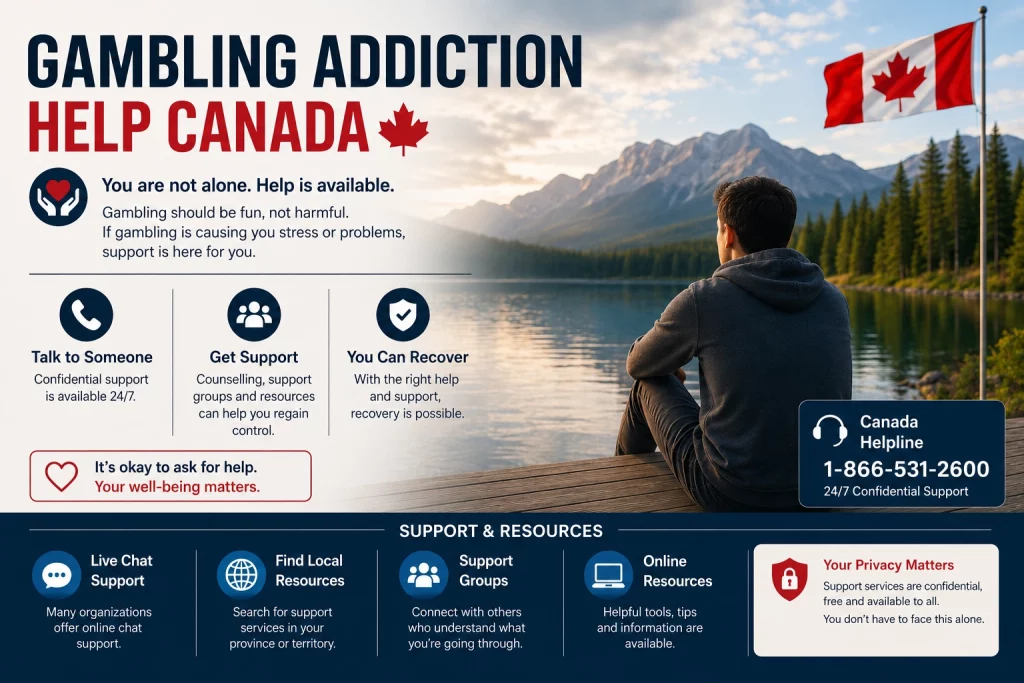
The core issue is compulsion. If a person repeatedly intends to stop but continues, spends more than planned, hides activity, borrows money, or feels unable to step away, the behaviour may be moving into harmful territory. The earlier these signs are recognized, the easier it is to use limits, take breaks, and seek help.
Online environments can make gambling addiction harder to notice because the activity may happen privately. There may be no physical casino visit, no visible cash exchange, and no obvious social signal that time or money is increasing. This is why self-monitoring matters.
| Warning Sign | What It Can Look Like | Safer Response |
| Chasing losses | Continuing to gamble because previous losses feel recoverable. | Stop the session, avoid increasing stakes, and consider support tools. |
| Spending more than planned | Depositing repeatedly or using money intended for bills, savings, or essentials. | Set firm financial limits and protect essential funds immediately. |
| Hiding gambling activity | Deleting messages, hiding transactions, or avoiding conversations about gambling. | Speak with a trusted person or contact a confidential support service. |
| Emotional dependence | Using gambling to escape stress, boredom, sadness, anger, or loneliness. | Replace gambling with healthier coping strategies and seek counselling if needed. |
| Loss of time control | Sessions lasting longer than intended or interfering with work, school, sleep, or family life. | Use time reminders, take breaks, or activate timeout tools. |
Why Online Gambling Can Increase Risk
Online gambling can increase risk because it removes many natural barriers. A person does not need to travel, carry cash, or enter a physical venue. Access can happen from a phone, laptop, or tablet. When gambling is available at any time, the habit can become more frequent and harder to separate from daily routines.
Mobile access can also make gambling feel casual. A short session may begin during a break, late at night, or after stress. The activity may feel small in the moment, but repeated sessions can add up financially and emotionally. This is why users should monitor both spending and frequency, not only individual outcomes.
Fast-paced game formats may also increase risk. Digital Slots and other quick-result Games can create repeated decision cycles, frequent visual feedback, and strong emotional reactions. A player may lose track of time or focus too much on recovering previous losses. Understanding this risk is part of responsible gambling education.
How Betty Casino Frames Player Safety
Betty Casino can present gambling addiction help as part of a wider player-safety framework. The most responsible approach is to provide clear information, encourage early action, and direct users toward practical support. A safer platform should not treat gambling harm as an afterthought. It should place education, limits, support contacts, and account-control tools where users can find them easily.
The user journey matters. Information about support should be visible before someone reaches a crisis. Pages about limits, self-exclusion, and gambling risks should be written in plain language. If a person feels concerned, they should not have to search through complicated policy pages to find help.
A useful help page should also avoid judgement. Gambling addiction is not a personal weakness. It is a recognized behavioural problem that can be addressed through support, boundaries, treatment, and practical safeguards.
Account Access and Early Controls
Account-based gambling creates an opportunity to provide safety tools early. During Sign up, platforms can show age rules, eligibility requirements, and responsible gambling information. After Login, users should be able to review account history, set limits, request a timeout, or find support information without confusion.
These tools are most effective when used before serious harm develops. A person does not need to wait until they feel out of control to set limits or take a break. Early use of control tools can prevent escalation and reduce emotional pressure.
For Canada players, the most practical habit is to treat account settings as part of safety management. Reviewing deposit history, session time, and personal limits can reveal patterns that may not be obvious during the moment of play.
When to Seek Help
A person should consider seeking help when gambling feels difficult to stop, causes anxiety, affects finances, creates secrecy, or becomes a way to manage emotions. Help can include a trusted friend, family member, counsellor, doctor, financial advisor, helpline, or peer-support group. The right first step depends on the level of harm, but earlier action is usually better.
Professional support may help with coping strategies, financial boundaries, relapse prevention, and emotional triggers. Peer support can reduce isolation and show that recovery is possible. Platform tools can reduce immediate access while longer-term support is arranged.
The key message is direct: support is not only for crisis moments. It can be useful as soon as gambling begins to feel harder to control.
Safer Gambling Tools and Practical Risk Control
Safer gambling tools are designed to help users reduce risk before gambling becomes harmful. They do not change the odds, remove house edge, or make gambling predictable. Their role is practical: they help limit access, spending, time, and emotional decision-making. For Canada players, these tools are especially important because online gambling can be fast, private, and available through multiple devices.
A responsible platform should make these tools easy to find and simple to understand. If a user needs to search through several pages to locate deposit limits, timeout options, or self-exclusion information, the safety design is weak. Betty Casino can treat these tools as part of normal account management rather than as emergency-only features.
The most effective approach is early use. Setting limits before gambling starts is usually more useful than trying to make decisions after a stressful loss or during an emotional session.
| Safer Gambling Tool | What It Does | Why It Helps |
| Deposit limit | Restricts how much money can be deposited within a chosen period. | Protects essential funds and reduces impulsive spending. |
| Loss limit | Restricts how much can be lost within a set timeframe where available. | Helps prevent chasing losses and escalating risk. |
| Session reminder | Notifies the user when time spent gambling reaches a selected point. | Improves awareness and helps prevent long, automatic sessions. |
| Timeout | Temporarily blocks access for a defined break period. | Creates distance after stress, repeated losses, or emotional play. |
| Self-exclusion | Blocks access for a longer period or permanently where available. | Supports users who need stronger separation from gambling access. |
Why Limits Should Be Set Early
Limits are most useful when they are set before emotional pressure appears. If a person waits until after a loss, the decision may be influenced by frustration, urgency, or the desire to recover money. Pre-set limits remove part of that pressure because the boundary is already defined.
A deposit limit should be based on disposable entertainment money, not money needed for rent, food, bills, savings, debt, school, transport, or family responsibilities. If gambling spending affects essential needs, the safest action is to stop and seek support.
Loss limits and time reminders also matter because harm is not only financial. Long sessions can affect sleep, concentration, mood, work, study, and relationships. A person may not always notice the impact immediately, which is why automatic reminders can be useful.
Mobile Access and Risk Awareness
Mobile gambling can increase risk because access feels effortless. A person can open an account from a phone, continue a session from another room, or return repeatedly throughout the day. This kind of access can make gambling feel less serious than it is.
An App or mobile interface should provide the same safety tools as desktop access. Limits, account history, support options, and self-exclusion should remain visible on smaller screens. Safety information should not be hidden behind vague icons or difficult menus.
Canada players should also consider notifications. Promotional reminders, account alerts, or repeated messages can trigger return behaviour. If notifications increase urges to gamble, turning them off may be a useful risk-control step.
Bonuses, Promotions, and Higher-Risk Decisions
Promotions can increase gambling risk when they make continued play feel more urgent. A Bonus may include wagering requirements, expiry times, maximum bet rules, restricted games, and withdrawal limits. These conditions can encourage longer sessions if users feel pressure to complete the terms.
A bonus should never be treated as free money. It is usually a conditional offer connected to rules. If a person accepts a promotion without understanding those rules, they may spend more time or money than planned.
Betty Casino’s help content should explain that promotional terms need careful reading. If a bonus changes behaviour by encouraging chasing, extended play, or larger deposits, the safer choice may be to avoid it.
Safer Gambling Tools
Finding Help Through Support Pages
A gambling addiction help page should make support information easy to understand. A clear FAQ can explain warning signs, limit tools, timeouts, self-exclusion, account closure, and where to find professional support. Useful Links should point users toward trusted gambling harm resources, counselling services, and official support organizations.
The best support structure is simple and visible. A person experiencing gambling stress may not have the patience to navigate complex menus. Help pages should use direct wording, clear steps, and non-judgemental language.
Betty Casino can strengthen this page by showing users that support is normal, available, and appropriate at any early warning stage.
Recognizing Gambling Harm Before It Escalates
Gambling harm often becomes serious because early signs are ignored or explained away. A person may tell themselves that one more session will fix the situation, that a loss is temporary, or that they can stop at any time. These thoughts can feel convincing in the moment, especially after a stressful loss or near win. However, repeated difficulty stopping is one of the clearest signs that gambling is no longer fully controlled.
For Canada players, early recognition is important because online gambling can remain private for a long time. Family, friends, and coworkers may not notice the behaviour immediately. This means the person affected often needs to rely on honest self-assessment. If gambling starts to affect money, sleep, mood, relationships, or daily responsibilities, it is time to pause and seek support.
| Risk Pattern | How It May Appear | Recommended Response |
| Chasing losses | Returning quickly after losing because recovery feels urgent. | Stop immediately, avoid new deposits, and use timeout tools. |
| Emotional gambling | Gambling after stress, anger, boredom, loneliness, or anxiety. | Use non-gambling coping methods and consider counselling support. |
| Secrecy | Hiding transactions, screen time, or gambling activity from others. | Speak with a trusted person and reduce private access. |
| Financial pressure | Using money needed for bills, rent, debt, food, or savings. | Stop gambling and contact financial or addiction support services. |
| Loss of routine | Gambling affects sleep, work, school, family time, or concentration. | Take a break and review whether stronger limits are needed. |
Why Chasing Losses Is Dangerous
Chasing losses is one of the most common and harmful gambling patterns. It happens when a person continues gambling because they want to recover money already lost. The problem is that gambling outcomes do not become more favourable because a person has lost earlier. A previous loss does not make a future win more likely.
This pattern can escalate quickly. A person may begin with a small planned budget, lose it, then deposit again to “get back to even.” If that second attempt also fails, the emotional pressure grows. The session is no longer entertainment; it becomes an attempt to repair damage through more risk.
Betty Casino’s educational content should explain this directly: the safest response to a loss is to stop, not to continue. If stopping feels difficult, that is a strong reason to use timeout tools or contact support.
Emotional Triggers and Online Access
Emotional triggers can make gambling harder to control. Stress, sadness, boredom, loneliness, anger, and financial worry can all push a person toward impulsive decisions. When gambling becomes a way to escape emotions, the risk of addiction increases.
Online access can intensify this because the activity is always nearby. A person may gamble late at night, during a stressful workday, or after conflict with someone close. The privacy of the experience can make it feel contained, but the effects may still reach finances, mood, and relationships.
A safer approach is to create a rule: avoid gambling when emotionally unsettled. If the urge to gamble appears mainly during stress, that is a signal to replace the activity with healthier coping tools, such as speaking to someone, walking, resting, budgeting, or contacting a support service.
Financial Warning Signs
Financial warning signs should be taken seriously. These include borrowing money, using credit to gamble, delaying bills, selling items, hiding bank statements, or making repeated deposits after losses. The exact amount is less important than the pattern. If gambling affects essential money, the risk level is already high.
Some people wait too long because they hope one future result will solve the problem. That hope can become dangerous. Gambling should not be used to repay debt or solve financial pressure. When money problems appear, the safest step is to stop gambling and seek help with both financial planning and behavioural support.
Professional support can help separate immediate financial decisions from gambling urges. This reduces the chance of making a difficult situation worse.
Support and Recovery Are Possible
Gambling addiction can feel isolating, but support exists. Recovery usually works best when several supports are combined: reduced access, professional help, peer support, financial boundaries, and honest communication with trusted people. A single tool may help, but a structured plan is stronger.
A person does not need to wait until the situation is severe. Early support can prevent deeper harm. Speaking to someone confidentially, setting exclusion tools, and reviewing finances can all be part of the first step.
The most important message is that gambling harm is treatable. With the right support, people can regain control, rebuild routines, and reduce the impact on finances and relationships.
Getting Help in Canada and Creating a Recovery Plan
Getting help for gambling addiction should be treated as a practical safety step, not as a sign of failure. When gambling starts to affect money, mood, relationships, sleep, work, or personal stability, outside support can make the situation easier to manage. For Canada players, help may include professional counselling, peer support, financial guidance, self-exclusion tools, and province-level gambling harm services.
A recovery plan usually works best when it combines several actions. One step may reduce immediate access, another may address financial pressure, and another may support emotional recovery. For example, a person may use self-exclusion to create distance from gambling, speak with a counsellor to understand triggers, and ask a trusted person to help review financial priorities. These steps work together because gambling harm is rarely only about one session or one decision.
Betty Casino can present this section as a clear support guide. The message should be direct: if gambling feels difficult to control, help is available, and early action is safer than waiting.
| Canada Support Resource | Type of Help | Link |
| Responsible Gambling Council | Education, prevention resources, and safer gambling guidance. | Visit resource |
| ConnexOntario | Confidential support for gambling, mental health, and addiction concerns in Ontario. | Visit resource |
| Gamblers Anonymous Canada | Peer-support meetings and recovery-focused community help. | Visit resource |
| CAMH Gambling Support | Clinical information and treatment-related guidance for gambling harm. | Visit resource |
| Canadian Centre on Substance Use and Addiction | Research and public-health information connected to addiction and harm reduction. | Visit resource |
What a Practical First Step Can Look Like
A practical first step should be simple and immediate. If gambling has become stressful, the person can stop the current session, avoid another deposit, and move away from the device. If access feels too easy, a timeout or self-exclusion tool can create distance. If money has already been affected, the next step may be to protect essential funds and avoid using credit or borrowed money.
The first conversation can also matter. Speaking with a trusted person may reduce secrecy and pressure. The conversation does not need to include every detail at once. It can begin with a clear statement such as: gambling has become harder to control, and support is needed. From there, the person can decide whether to contact a counsellor, helpline, support group, or financial advisor.
For many people, the most difficult part is starting. A help page should make the starting point feel concrete: pause, protect money, reduce access, talk to someone, and use professional support if control remains difficult.
Gambling Recovery Support
Long-Term Control and Relapse Prevention
Long-term control is not only about stopping one session. It is about changing the conditions that allow harmful gambling to continue. This can include removing saved payment methods, reducing exposure to gambling messages, avoiding high-risk times of day, setting financial safeguards, and building alternative routines.
Relapse prevention also depends on understanding triggers. Some people are more vulnerable after stress, conflict, payday, boredom, loneliness, or alcohol use. Others may be triggered by promotional messages, sports events, casino themes, or memories of previous wins. Identifying these patterns makes it easier to prepare safer responses.
A long-term plan may include regular check-ins with a counsellor, attendance at peer-support meetings, financial tracking, and ongoing use of exclusion tools. The goal is not perfection. The goal is reducing harm, restoring stability, and building a structure that makes gambling less accessible during vulnerable moments.
How Betty Casino Can Present This Responsibly
Betty Casino should present gambling addiction help with a serious, supportive tone. The page should not sit beside aggressive promotional language or urgency-based offers. A user reading about addiction help may already be under stress, so the content should be clear, calm, and easy to act on.
The most useful structure is practical: explain warning signs, provide support resources, describe first steps, and remind readers that help can begin before the situation becomes severe. This type of content builds trust because it prioritizes safety over activity.
The page should also make clear that gambling should never be used to recover losses, manage emotional pain, or solve financial problems. If gambling begins to feel necessary rather than optional, that is a sign to stop and seek help.






Comments